
ReefBot Lab
$1,599
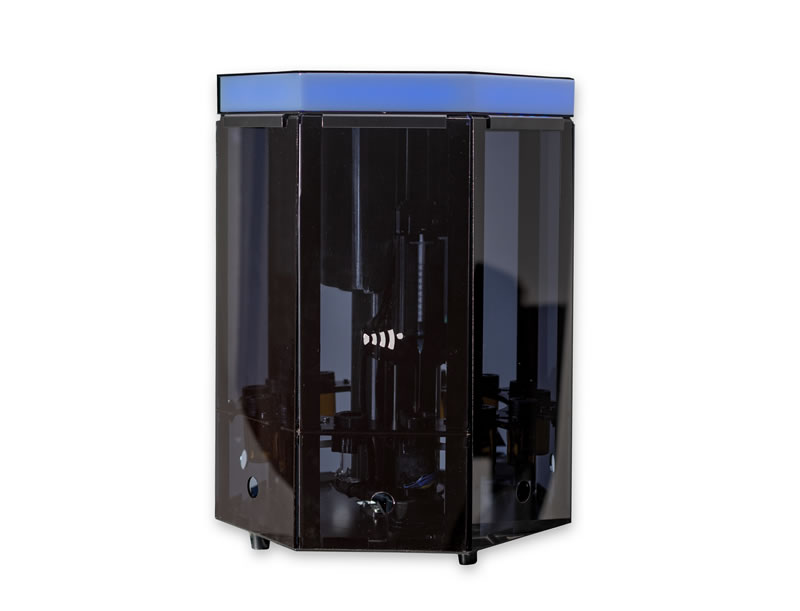
ReefBot Lab is an automated water-testing device capable of testing 18 tank parameters using third-party test kits.
Free worldwide shipping · duties calculated at checkout · ships within 1 week.
Prefer to buy locally? See where to buy → · Returns & refunds
Ships within 1 week
Monitor your tank parameters
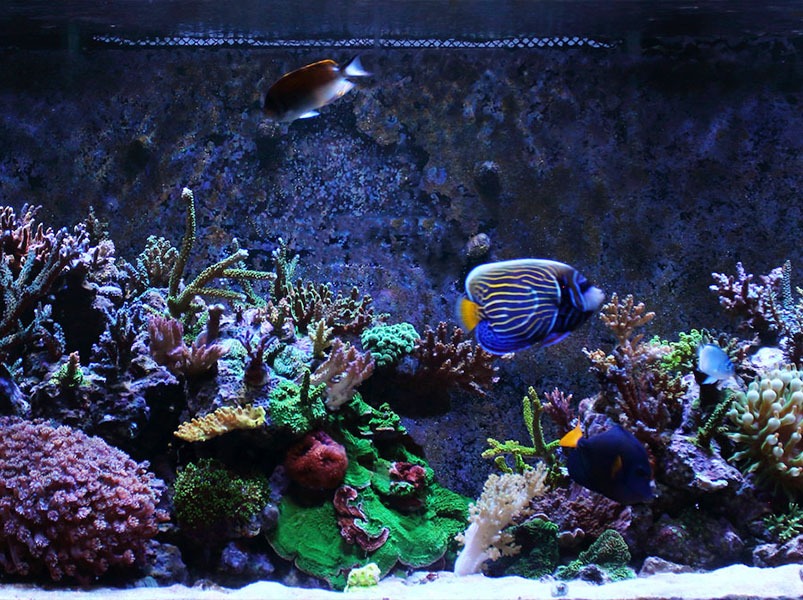
ReefBot Lab uses a reagent-based method to autonomously measure the levels of the parameters in your tank. It currently measures 18 parameters like Alkalinity (Alk), Calcium (Ca), Magnesium (Mg), Nitrate (NO3), Phosphate (PO4), Nitrite (No2), Ammonia (NH3), Copper (Cu), Iodine (I2), pH, and more. With more parameters added regularly.
Supports multiple test kits
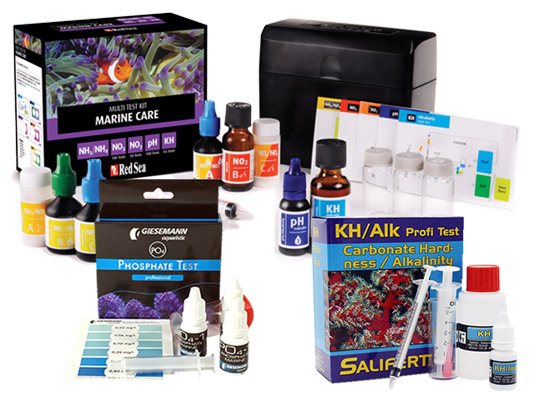
ReefBot Lab is configured to work with reagent test kits available on the market from the following brands: Salifert, Elos, Red Sea, Giesmann, Tropic Marin, Fauna Marin, API, JBL, Sera, AquaForest, NYOS, Monitor, NTLABS, Colombo, and more. Changing kits is as simple as selecting a brand and parameter on the mobile and web application.
What’s new?
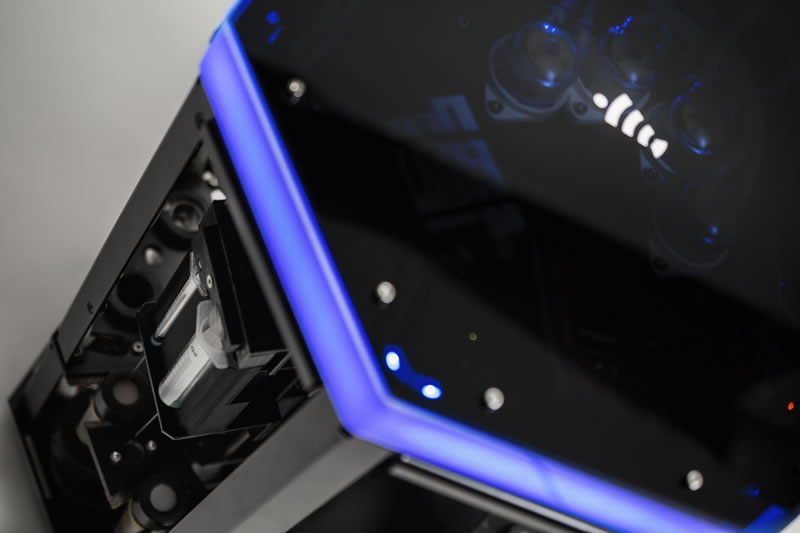
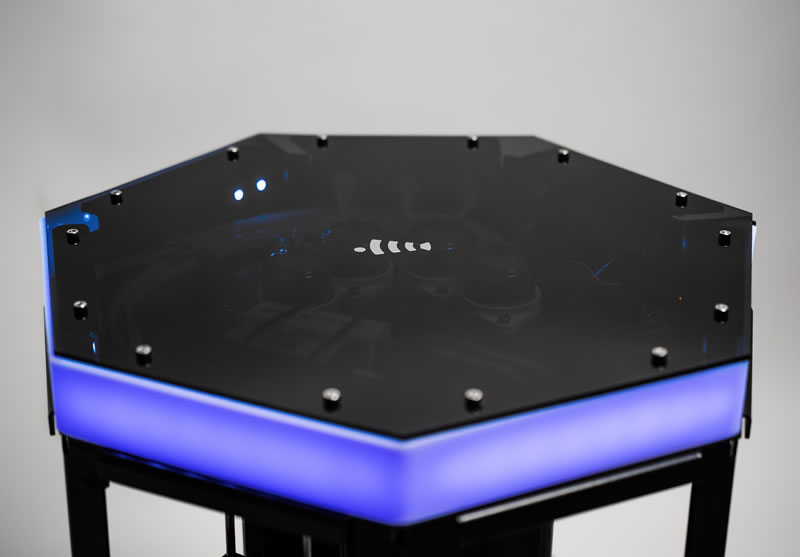
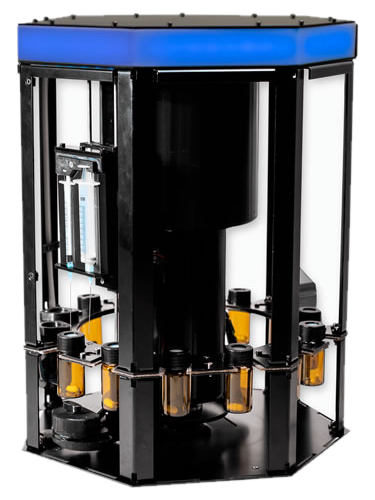
Design – A whole new sept-agonal design with new mechanics that offers enhanced performance and faster results.
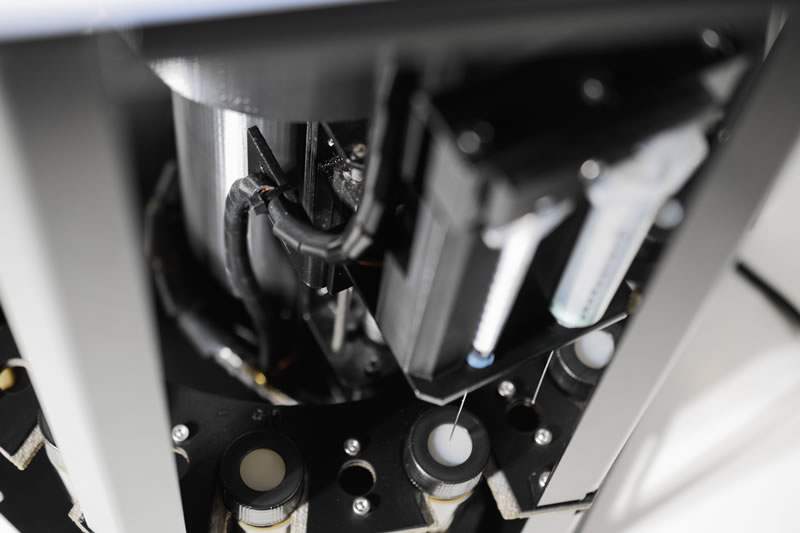
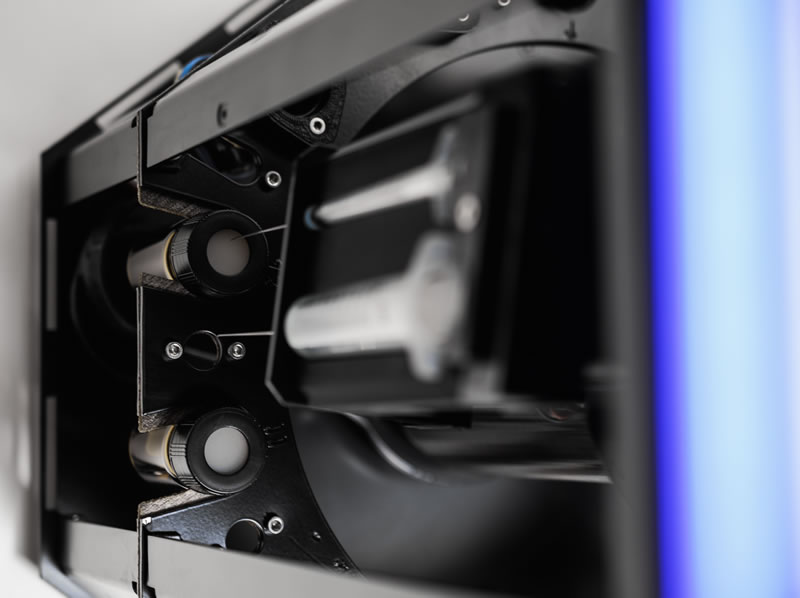
Reagent Slots – ReefBot holds 12 reagent slots which will allow testing more parameters simultaneously.
New Motors – The new actuators are faster, more reliable, and have wider resolution.
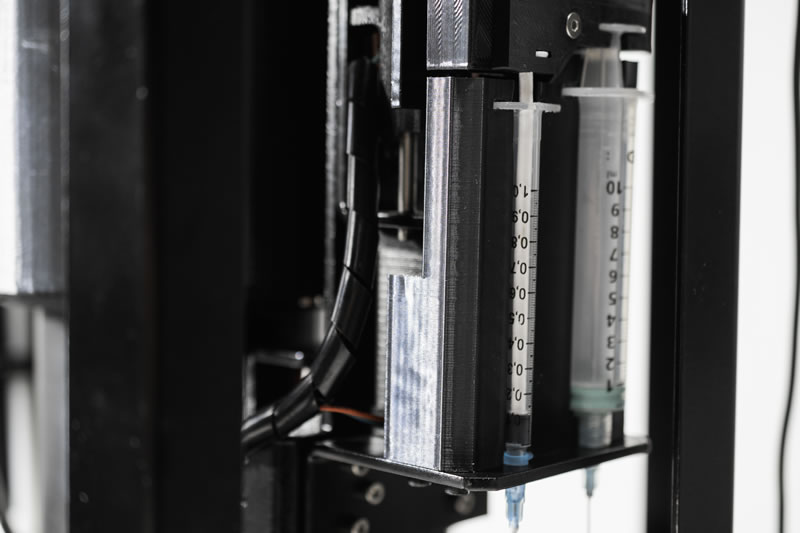
Precision – ReefBot Lab is more precise in testing, supporting higher resolution titration tests, with a precision of 0.001 microliter (1μl).
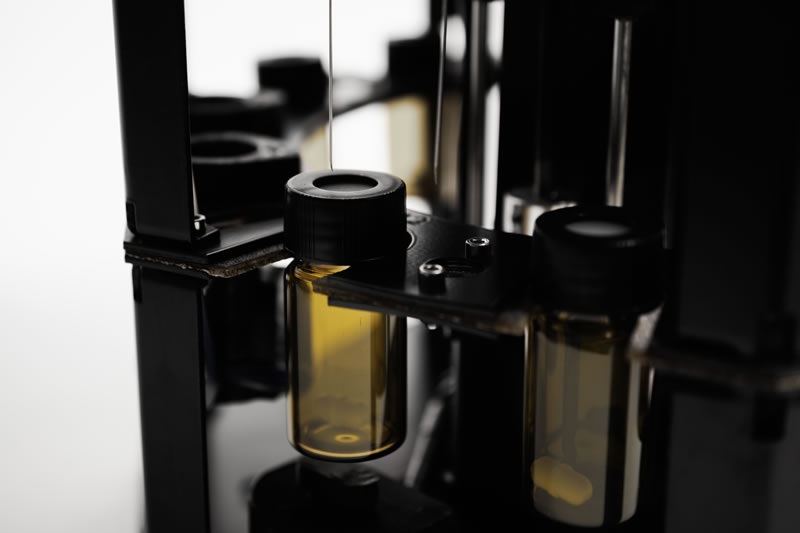
Reagent Access – The needle reaches the bottom of the vial for maximum reagent usage.
LED Switch: You can now turn the lights on and off with ease thanks to the switch on top of the device.
Reduced Consumption and Calibrations – The new syringe precisely adds water, removing the need for calibrations.
Easy Setup on any tank
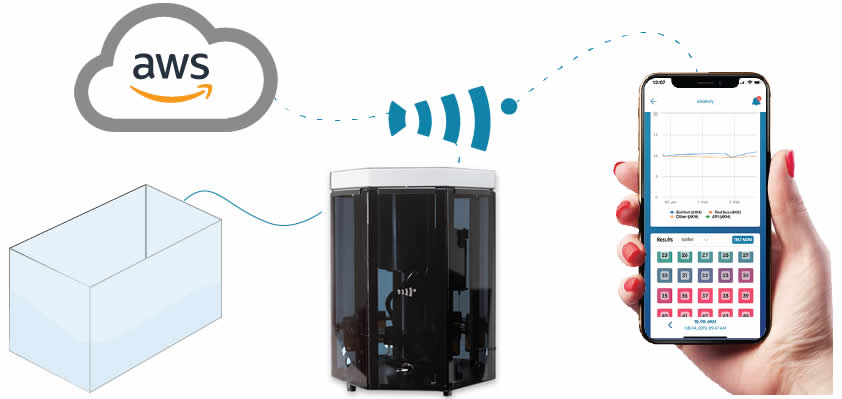
The ReefBot Lab can be installed on any tank by simply immersing the inlet tube in the tank and connecting two tubes to RODI and waste containers or by placing the sample water inside a vial.
It connects to the internet through any wifi or ethernet network.
Click here to view the full user manual.
Controlled by Reef Kinetics Cloud Controller App
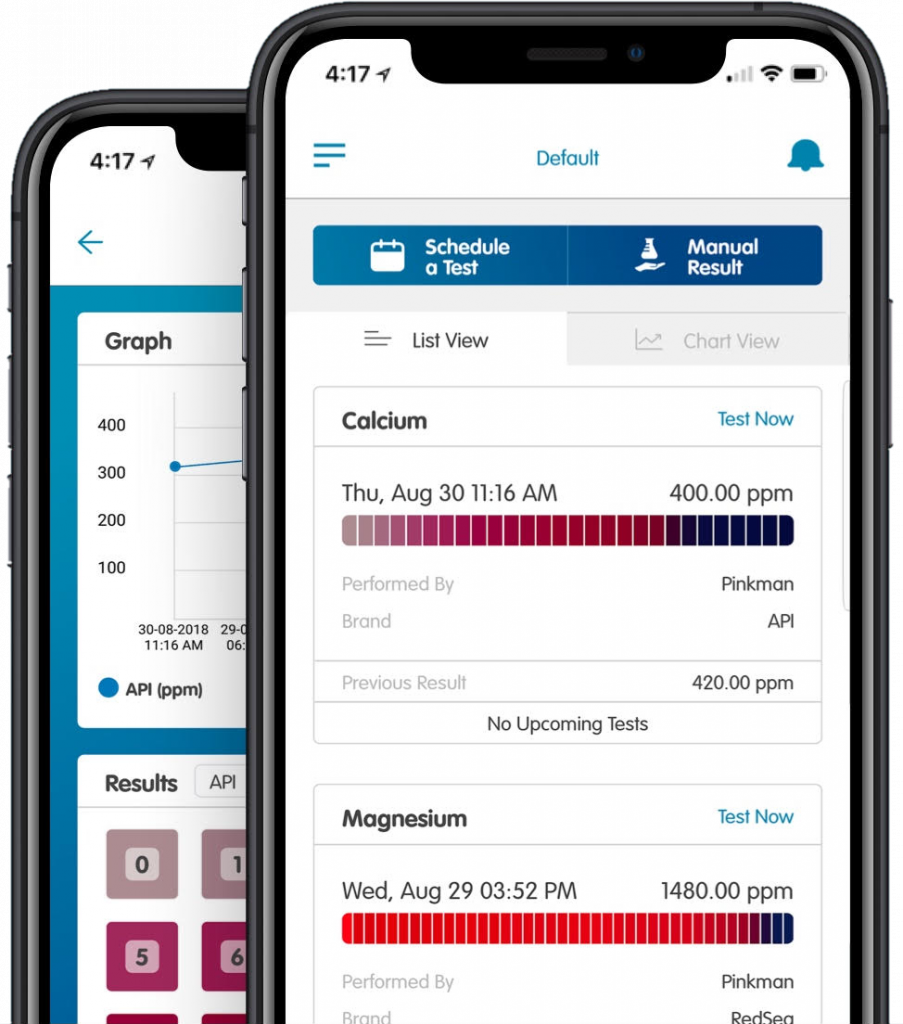
The ReefBot Lab is controlled from anywhere in the world through a mobile and web app with a simple interface to schedule and run tests, view all results and receive alerts when new test results are ready.


HIGHLIGHTS
- Automated testing of Alkalinity, Calcium, Magnesium, Nitrate, Phosphate, Nitrite, Ammonia, Copper, Iodine, Iron, Potassium, Chlorine, Bromine, Silicate, Carbon Dioxide, pH, General Hardness and more.
- Easy installation on any tank, connects through wifi or ethernet.
- ReefBot Lab is supplied with a 2-meter – 78.7″ tube to connect to your tank.
- Our glass vials are 20ml. In some cases, you would need more than one test kit to fill the vials. 60ml vials are also available separately.
- Schedule tests and receive alerts from anywhere through mobile, smartwatches, and web apps.
- Compatible with reagents from Salifert, Red Sea, Giesmann, Elos, Tropic Marin, Fauna Marin, API, Colombo, JBL, NYOS, Sera, Monitor, NTLABS, and more.
- Minimal maintenance.
SPECIFICATIONS
- Package Weight: 440 oz (8.9Kgs)
- Package Size: 19.3″ x 16.5″ x 16.5″ (49 cm x41cm x41cm)
- ReefBot Lab dimensions: 17.3″ (Depth) x 12.5″ (Width) x 12.5″ (Height) (44cm x 31cm x 31cm)
- Power Supply: 100- 240V
- Connectivity: Wifi/Ethernet
- Reagent Slots: 12
- In the Box: 1 ReefBot Lab – 12 glass vials – 1 power supply – 1 extension cable – 3 2m silicon tubes – 15 magnetic stirrers – 1 calibration kit – 12 vial labels – 5 needles – 5 sampling syringes – 2 dosing syringes
Frequently Asked Questions
How to automate reef tank water testing
You automate reef tank water testing by using an automated tester like the ReefBot Lab, which performs reagent-based titration tests on a schedule and reports results to an app – no manual pipetting, color-matching, or logging required.
Here is how automated testing works in practice:
- Install once. Place the ReefBot Lab next to your tank, drop the inlet tube into the water, and connect it to RODI and waste containers (or run single samples from a vial). It connects over WiFi or Ethernet.
- Load your reagents. ReefBot Lab uses standard hobby test kits you already buy – Salifert, Red Sea, API, Tropic Marin, Fauna Marin, Elos, Giesemann and others. It holds 12 reagent slots, so it can test multiple parameters in one run.
- Schedule tests in the app. Choose which parameters to test and how often. The device draws the sample, adds reagent with 0.001 ml (1 µl) precision, reads the result, and rinses automatically.
- Get results and alerts anywhere. Readings sync to the Reef Kinetics mobile and web app with trend charts and alerts when a parameter drifts out of range.
The result: lab-grade, repeatable measurements every day without being at the tank, and a continuous history of your water chemistry instead of occasional spot-checks.
ReefBot Lab vs manual testing
ReefBot Lab automates the same reagent test kits you would use by hand, removing human error, color-matching guesswork, and the time cost of daily testing. Manual testing is cheaper to start but relies on you being present, consistent, and accurate every time.
| Manual testing | ReefBot Lab | |
|---|---|---|
| Who runs the test | You, by hand, each time | The device, on a schedule |
| Consistency | Varies by user, lighting, timing | Identical method every run |
| Reading the result | Your eye matches colors | Sensor reads color/titration objectively |
| Resolution | Limited by kit increments | Higher-resolution titration on Alk, Ca, Mg |
| Record keeping | Manual notes or spreadsheet | Automatic history and trend charts |
| Alerts | None – you have to notice | Push alerts when a parameter drifts |
| Time per week | Hours of pipetting and logging | Minutes (refill reagents, review app) |
| Best for | Occasional spot-checks, tight budget | Stability-critical reef tanks, busy reefers |
ReefBot Lab does not use proprietary consumables – it works with the third-party kits already on the market, so you keep your choice of brand and only change a setting in the app to switch kits. The trade-off is upfront cost ($1,599) versus the ongoing time and human-error cost of testing by hand.
Best parameters to measure in a reef tank (and how often)
The most important reef tank parameters to measure are Alkalinity, Calcium, and Magnesium (the “big three”), followed by Nitrate and Phosphate for nutrient control, plus pH, Ammonia, and Nitrite. Alkalinity is the single most important to track frequently because it shifts fastest and most directly affects coral health.
- Alkalinity (Alk/KH) – daily to every other day. Drives coral skeletal growth and swings fastest.
- Calcium (Ca) – 2–3x per week. Works with alkalinity for coral calcification.
- Magnesium (Mg) – weekly. Keeps calcium and alkalinity stable and in balance.
- Nitrate (NO3) – weekly. Too low starves corals, too high fuels algae.
- Phosphate (PO4) – weekly. Balanced against nitrate for color and nutrient control.
- pH – ongoing/daily. Affects calcification and livestock comfort.
- Ammonia (NH3) & Nitrite (NO2) – during cycling and after adding livestock; should read zero in an established tank.
ReefBot Lab can measure 18 parameters in total – including Alkalinity, Calcium, Magnesium, Nitrate, Phosphate, Nitrite, Ammonia, Copper, Iodine, Iron, Potassium, Chlorine, Bromine, Silicate, Carbon Dioxide, pH, and General Hardness – and automatically tracks each on its own schedule, so the big three can run daily while others run weekly, all without manual work.